Posts

Showing posts with the label Tensile test

Mechanical Tests – Tensile Test – Impact test
Image
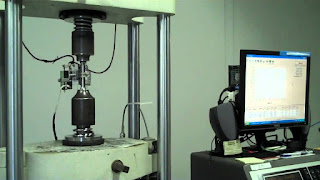
  Mechanical tests . Mechanical tests (exclusive of hardness) have been designed to test several weld properties. 1.    Tensile Test:    Tensile tests are conducted on specimens machined from a test weld and are used to measure the strength of the weld joint. Specimens are usually taken perpendicular to the weld, which is centered in the specimen.     Specimens are sometimes taken along the weld and consist entirely of weld metal. Specimens may have round or rectangular cross sections, depending on the requirements of  the applicable welding code. The testing machine applies a tensile force until ruptures .    From readings on the machine and measurements of the specimen before and after the test, properties such as yield point or yield strength, ultimate strength, and ductility are calculated.    Guided bend tests indicate a weld’s ductility . Test specimens are described as root-bend, face...

What is Mechanical Testing or Material Testing?

Image
What is Mechanical Testing or Material Testing? Mechanical testing involves finding strength of the material or quality of material by application of load mechanically. There are different mechanical testing for materials. They are Tensile test, Bend Test, Impact Test, Macro Etch Test, Micro Analysis, Inter granular Corrosion test, Vickers Hardness Test, Brinell Hardness test and includes Spectro Chemical Analysis. Why is Mechanical Testing on Materials required? Mechanical tests mentioned above are essential for materials to conclude the quality of materials. The material grades are designed for some specific application, in order to withstand the loads and environment in the application. The materials grades should achieve the minimum specified property. These minimum required quality specifications are verified by manufacturer after pouring the material and manufacturer should provide a mill test report. What is MTC / What is Mill Test Report ? Mi...